The same purchase budget can put you in very different properties depending on the municipality, neighbourhood, property type and condition of the home.
But comparing asking prices alone doesn’t tell the full story.
How do home prices compare in Oakville, Burlington and Hamilton?
According to September 2026 MLS® Home Price Index reporting, the composite benchmark prices were approximately:
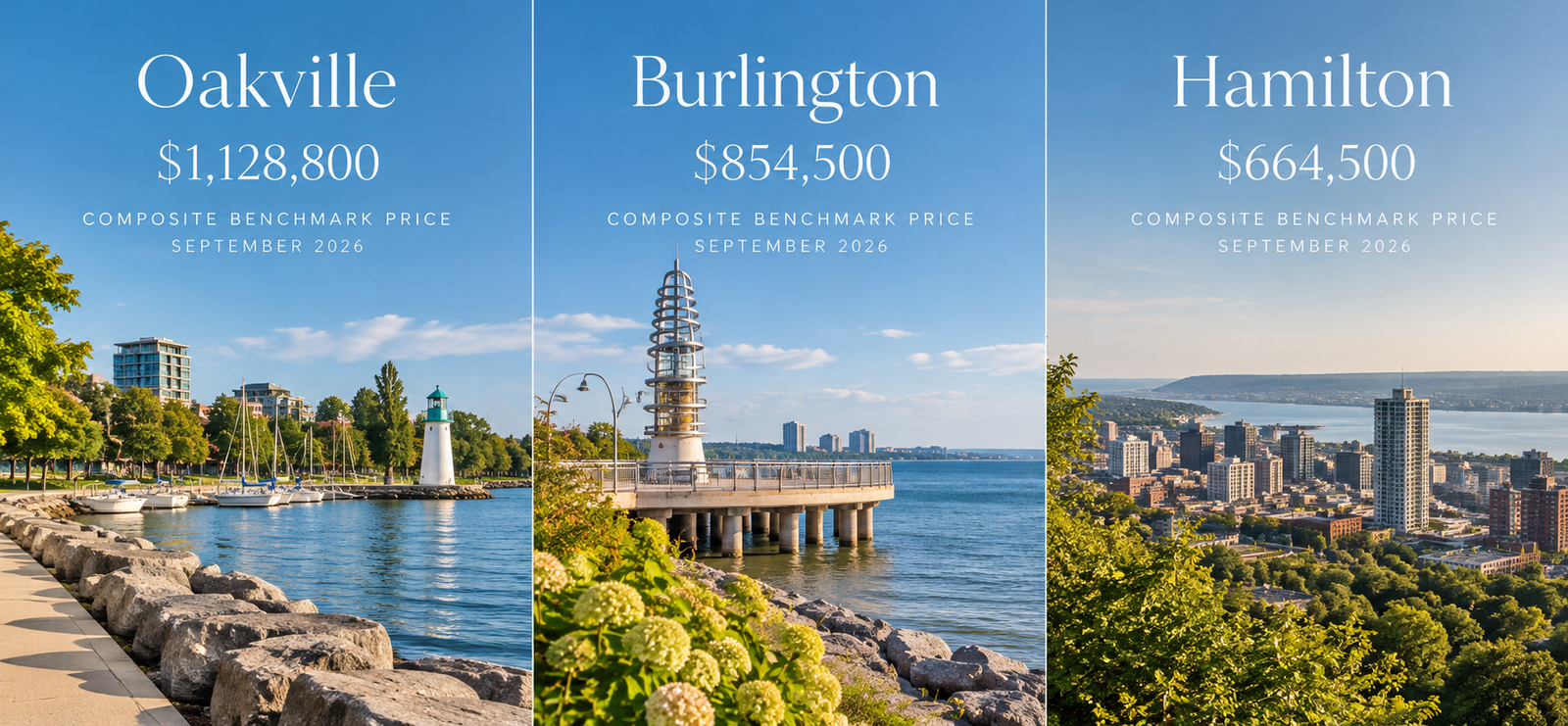
These are benchmark prices, not average sale prices or estimates of what every home costs.
The differences are significant, but buyers should also consider property type. A condominium apartment in Oakville may fit a budget that wouldn’t accommodate a detached house in the same municipality.
Similarly, a buyer looking at a freehold townhouse in Burlington may discover detached-home options in parts of Hamilton.
The key is comparing actual properties that meet your needs, rather than assuming one city offers better value across every price range.
What can you buy with a $700,000 to $900,000 budget?
This is where your property search needs to become more specific.
In Oakville, buyers within this range may be considering condominium apartments, townhouses and selected other properties, depending on current inventory.
In Burlington, the same budget can open up different townhouse and condominium options, along with some freehold properties.
In Hamilton, buyers may find a broader selection of detached, semi-detached and townhouse properties within this range, depending on the neighbourhood and condition.
These are search possibilities, not guaranteed availability. Recent comparable sales and active listings are essential before setting expectations.
A buyer with an $850,000 budget, for example, should consider whether a smaller, updated property in their preferred location is more suitable than a larger home requiring substantial renovations elsewhere.
Is a freehold townhouse better than a condominium townhouse?
This is an important question for buyers comparing properties across Oakville, Burlington, Milton and Hamilton.
A freehold townhouse generally gives the owner responsibility for maintaining their property without the same condominium corporation structure.
A condominium townhouse may include shared maintenance arrangements and monthly common expense fees. However, the exact responsibilities depend on the condominium’s governing documents.
Before purchasing a condominium property, buyers should investigate:
- Monthly condominium fees and what they cover
- Reserve fund information
- Planned major repairs and maintenance
- Potential special assessments
- Restrictions affecting the property
A lower purchase price doesn’t automatically mean a lower cost of ownership.
The Condominium Authority of Ontario provides useful guidance on reviewing these matters before buying.
Don’t overlook the condition of the property
Two homes listed at similar prices can have very different financial implications.
When viewing resale properties, I pay particular attention to the age and apparent condition of major systems and components, including the roof, furnace, air conditioning, windows and electrical systems.
An updated kitchen is appealing, but a buyer also needs to understand whether expensive repairs may be approaching.
A home inspection and appropriate specialist assessments can help identify concerns that aren’t obvious during a showing.
For buyers comparing an older detached home in Hamilton with a newer townhouse in Burlington or Milton, these potential expenses should be part of the decision.
What other costs should buyers consider?
Your mortgage payment is only one part of the cost of owning a home.
Depending on the property, additional expenses can include property taxes, insurance, utilities, condominium fees, maintenance and municipal charges.
Oakville, for example, introduced a residential stormwater fee in 2026. The amount varies according to the property’s classification.
First-time buyers should also account for Ontario land transfer tax and applicable rebates. Eligible first-time purchasers may qualify for an Ontario land transfer tax refund of up to $4,000.
Mortgage qualification and down payment requirements should be reviewed with a qualified mortgage professional before beginning a serious search.
Should you buy in Oakville, Burlington or Hamilton?
There isn’t one correct answer.
For some buyers, remaining in Oakville is a priority because of their daily routines, existing connections or preferred neighbourhoods.
Others may find Burlington offers a suitable combination of property options and location.
Hamilton may appeal to buyers who prioritize a particular property type, additional space or a different purchase price range.
Milton and Georgetown are also worth considering when comparing communities across Halton Region.
What matters is identifying your priorities before becoming attached to a particular property.
I recommend beginning with three questions:
What is your comfortable total monthly housing budget?
Which property features are essential, and which are negotiable?
Which locations realistically work for your everyday life?
The answers can help narrow your search considerably.
If you’re considering buying in Oakville, Burlington, Milton, Georgetown, Hamilton or surrounding areas, I can help you compare current listings, recent sales and property-specific considerations before you make a decision.
Whether you’re purchasing your first home, moving to a larger property or downsizing, the goal is to find a home that suits both your needs and your budget.
Start Your Home Search: