Buyers Are Approaching the 2026 Housing Market Differently
What Is Changing for Buyers in Burlington and Hamilton?
1. Inventory Levels Are Creating More Selection
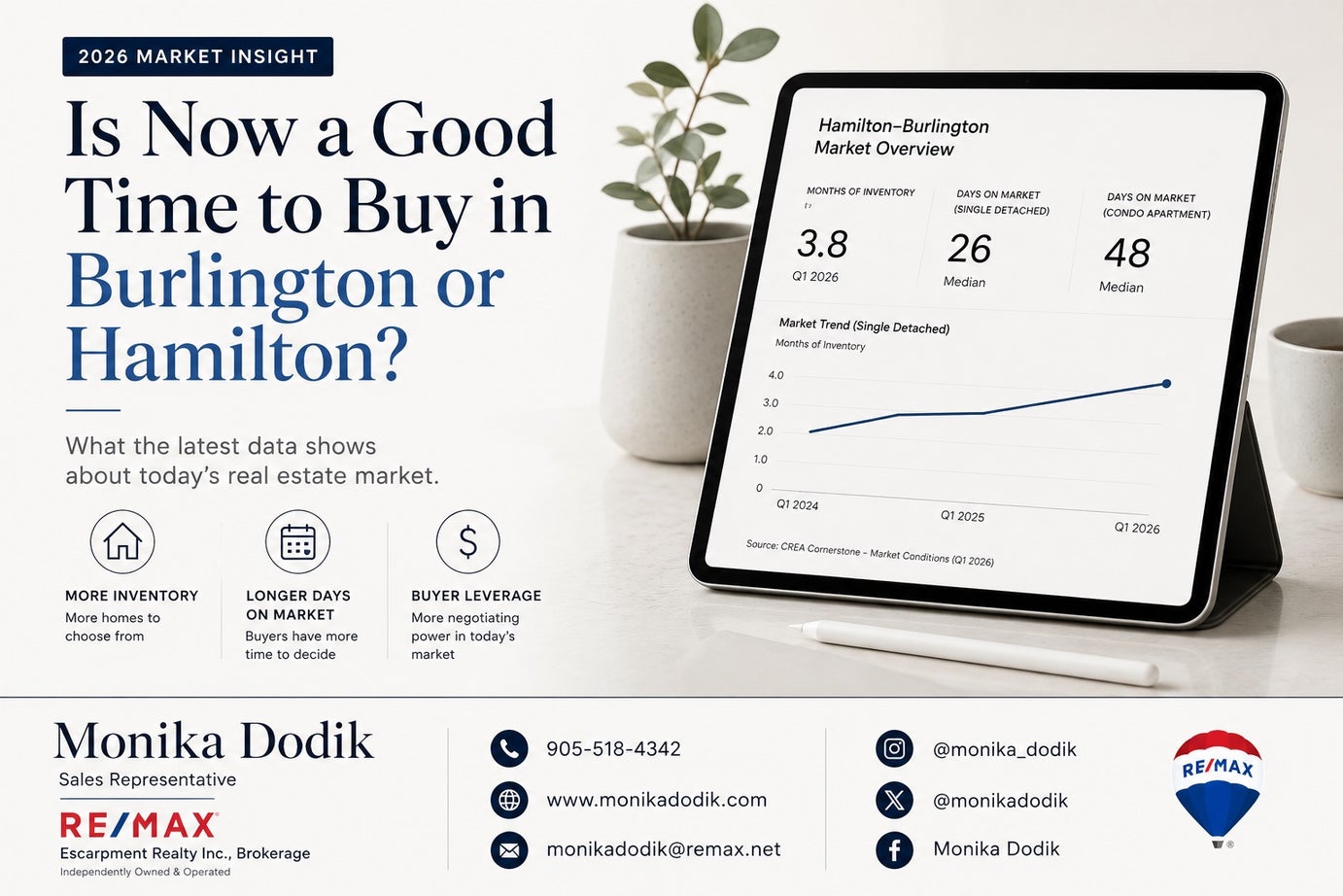
One of the biggest changes in the Burlington and Hamilton real estate market is inventory.During the peak market years, buyers often had very limited options and were forced to make quick decisions under pressure. In 2026, there are more listings available across many property types, particularly condos and some townhouse segments.This gives buyers more time to:- Compare neighbourhoods
- Review comparable sales
- Evaluate property condition
- Include financing or inspection conditions more often
- Negotiate pricing and terms more carefully
2. Pricing Conditions Have Moderated
According to CREA Hamilton-Burlington median price data for Q1 2026:- Single detached home median prices declined 5.5% year over year to $784,000
- Townhouse median prices declined 6.3% year over year to $649,900
- Apartment unit median prices declined 8.8% year over year to $445,000
3. Competition Has Slowed in Many Segments
Sales activity has slowed compared to previous years.CREA reported that Hamilton-Burlington residential sales fell 9.1% year over year in Q1 2026, with apartment sales down 17.3%.Fewer active buyers in the market often means:- Less competition
- Fewer bidding wars
- More negotiating flexibility
- Additional time to make decisions
Areas Where Buyers Are Still Facing Competition
Although conditions have improved for buyers, affordability remains an important factor.Interest rates, monthly carrying costs, property taxes, insurance, and utility expenses continue to impact purchasing decisions throughout Ontario.Additionally, not all neighbourhoods are performing equally.Communities such as Burlington, Waterdown, Ancaster, Dundas, and parts of Stoney Creek continue to see steady demand due to location, schools, commuting access, and lifestyle appeal.Well-priced homes in desirable neighbourhoods can still attract strong buyer interest.Market Conditions Still Vary by Property Type and Location
The market is becoming more balanced, but conditions vary depending on property type and price range.According to CREA sales-by-price-range data:- Detached homes under $800,000 remained one of the tighter market segments in Q1 2026
- Condo apartments generally showed weaker demand and longer selling times
- Higher-priced detached homes saw slower sales activity compared to more affordable price ranges
Final Thoughts on the 2026 Burlington and Hamilton Housing Market
The Burlington and Hamilton housing market in 2026 looks very different from the highly competitive conditions buyers experienced just a few years ago.Inventory has increased, homes are taking longer to sell, and buyers generally have more negotiating power and flexibility than they have had in recent years.At the same time, affordability remains a major consideration, and desirable neighbourhoods continue to attract steady interest.For buyers who are financially prepared and planning for the long term, the current market may offer opportunities that were difficult to find during the peak years of the market cycle.Thank you for reading.